

Do Objects For Recycling Need To Be Cleaned?
When information technology comes to recycling plastics, keep it make clean – and know the rules
From motorcar parts to trash carts to pop bottles: Recycled plastics take a number of uses.

This story was originally published on the Detroit Free Press.
Essentially, everything you need to know about recycling a piece of household plastic you learned in elementary school.
"While it's possible to find a new use for nigh all plastics, several factors can affect an individual type'southward recyclability," said Matt Flechter, recycling market place development specialist with the Michigan Section of Environment, Swell Lakes, and Energy (EGLE).
Most important, he explains, is to recognize the detail's shape.
"Containers such as shampoo bottles, milk jugs and yogurt cups or similar nutrient tubs are the easiest to recycle and are in highest demand by recycling centers and U.Southward. manufacturers," Flechter said.
The bottom line for Michigan households, he said, is to follow the communication EGLE is stressing in its new "Know Information technology Before You Throw It" recycling educational activity campaign: "Ask your local recycling provider what kinds of plastics information technology accepts and make sure to put only those in your recycling container," Flechter said.
The shape of things to come up
Simply while shape and size primarily determine what ultimately happens to the detail after it'south thrown in a recycling bin – and fifty-fifty whether people should put information technology there in the starting time place – basic numbers remain part of the story.
Many consumers believe the little digit surrounded past the recycling symbol found on each plastic container indicates that the bottle or container is recyclable.
"What many people don't realize is that those numbers merely stand for the type of resin the piece of plastic is fabricated of," Flechter said. "They were never intended to provide recycling management, although that'due south what people take come up to believe over the years."
In fact, guidance from many recycling services has promoted that misleading messaging, he said.
"What they'll typically tell households is that they'll accept some combination of Nos. 1 through 7 plastics in their curbside pickup," he said. "Information technology'due south done with the best of intentions to go far easier for consumers to sympathize plastics recycling. But it'southward really not the most precise advice, and providers increasingly are kickoff to focus more than on size and shape versus numbers."
Leaving the digital age
In the meantime, however, the numbers tin can still serve as a rough rule of thumb to promote proper plastics recycling. In general, items labeled as Nos. 1 and 2 are in strongest need, followed by No. v, while other plastics are harder to recover and have weaker markets.
Typically, No. 1 plastics – including soft drink, juice and water bottles – are made from polyethylene terephthalate, or what is normally referred to as PET. The containers are easily recycled dorsum into bottles and are sometimes used to make carpeting, baggage and polyester.
No. 2 plastics – typically high-density polyethylene, or HDPE – oftentimes include Items such as laundry and shampoo bottles. They commonly are returned to the same use, but tin also find their way into new trash containers, buckets and floor tiles.
Additionally, there is need for polypropylene (PP) plastic, commonly known as No. five plastic. It often is used in yogurt and margarine tubs that are remade into other food containers.
Recyclers should too know that their local recycling service has every incentive to notice a company that volition somehow reuse whatever it takes in, said Dave Smith, recycling coordinator for the Michigan State Academy Surplus Store and Recycling Center, which collects and sorts all recyclable cloth on the East Lansing campus.
"You hear people say, 'Well, it's just going in the landfill anyway,'" he said. "Only if y'all think about it logically, it doesn't make a lot of sense for a recycler to collect nonrecyclable items. Otherwise, we're just paying the cost for it to go into landfills. So if at that place are communities taking the textile, people should feel adequately confident that it's actually getting recycled."
Furthermore, some plastics that aren't suitable for curbside collection – including plastic grocery numberless and motion picture overwraps – are sometimes accepted at driblet-off locations, Flechter said.
International policies affect local recycling
Plastics that consumers recycle commencement get to a materials recovery facility (MRF) that separates them for marketing to manufacturers or processors that shred or grind them into pellets for use past the ultimate product makers.
Traditionally, nonbottle plastics accept been less likely than PET and HDPE bottles and containers to enter the U.S. recycling stream because they're relatively harder to recover and sort, said Darren McDunnough, owner, president and CEO of McDunnough Inc., a Fenton-based recycler and compounder of post-industrial plastic, which is typically waste produced during manufacturing processes.
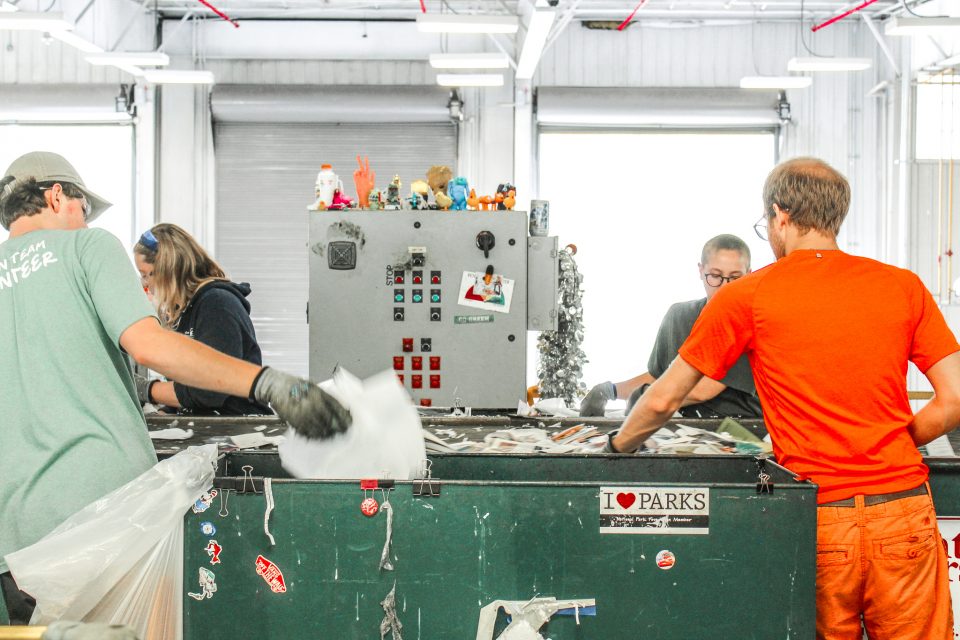
"It's piece of cake for workers who are doing the sorting at a MRF to place a PET h2o bottle or [HDPE] detergent bottle," McDunnough explained. "Only [other resins are] more difficult to sort and divide. They're products that are not readily identifiable visually when sorting past paw, so you take to implement and employ technology to segregate those materials."
And the technology to split many different types of plastic can show expensive and raise the toll of accepting a broad range of plastics. That's why most unsorted and nonbottle plastics recycled past U.South. consumers for years were shipped to China, which relied on low-wage hand sorting to separate recyclables.
Only in 2018 Cathay banned almost all plastic imports – prompting U.Southward. municipalities and other recycling service providers to invest in equipment such as infrared sensors that better place each type of plastic.
It also gave rise to EGLE'southward "Know Information technology Earlier You Throw It" entrada, which across educating consumers most what can and can't be recycled also stresses the importance of placing only clean items in recycling containers.
"Our ultimate goal is to create more jobs and a cleaner environs by bolstering Michigan'south recycling industry and infrastructure," Flechter said. "Michigan residents can help brand the system more than efficient by properly recycling."
Michigan manufacturers stepping up
Beyond recycling properly to support Michigan'south recycling businesses and collection programs, using consumer purchasing ability to purchase products made with recycled plastics will also bolster the demand for plastics collected at the curb in the long run, Flechter said.
Cascade Engineering, based exterior One thousand Rapids, is 1 company responding to the market place shift by striving to incorporate more recycled material into its products.
In January, it unveiled its EcoCart, a waste container made of 10% mail-consumer HDPE plastic - specifically beefy, rigid items recycled past U.S. consumers, such equally laundry baskets that are picked upward at the curb but are ofttimes difficult to recycle, said JoAnne Perkins, Cascade's vice president of environmental systems and services.
Typically – other than their wheels, which are made of recycled containers – Cascade's carts are manufactured from virgin, never-before-used plastic.
But Perkins was inspired to change that afterward hearing Brent Bell, a Waste material Management executive, claiming attendees at a sustainability conference in Arizona final twelvemonth to help find new uses for recyclable material that used to go shipped to China.
"It was effectively a claiming to create the 'demand' side of the recycling equation," Perkins said. "With [China'south policies], we have a responsibleness to create a demand for these products. I idea I could exercise more on my cease."
She tasked Pour engineers with figuring out how much recyclable material could go into a cart without compromising cost or functioning.
While they initially settled on 10%, the ultimate goal is to get to 25% recycled content, Perkins said.
"We've come up a long manner in a year, and I'1000 very proud of our engineers," she said. "Nosotros're starting to shift the marketplace a fiddling scrap."

Source: https://recyclingraccoons.org/when-it-comes-to-recycling-plastics-keep-it-clean-and-know-the-rules/
Posted by: lopezthurely1960.blogspot.com
0 Response to "Do Objects For Recycling Need To Be Cleaned?"
Post a Comment